
ATM | Rooted in Community: The Power of Rural Schools
-2.jpg)
In Canada and Alberta, public education is built on a promise we all share—called the social contract. This means every child deserves the chance to learn, no matter where they live. For rural families, schools are much more than classrooms; they are the heart of the community, bringing people together and helping kids grow up with confidence and pride.
The Social Contract: Fairness for Everyone
The history of this social contract has evolved from select students attending school, to schools being a place for all. As part of the social contract, the provincial government is responsible for providing the resources and framework (link) that support public schools. This partnership between government, families, and communities helps guarantee fairness and equity in education for every student.
However, rural schools sometimes face additional challenges. When funding shifts due to enrollment or other funding formula adjustments, there is additional pressure on rural schools to provide a full suite of opportunities and run efficiently. That's why it's important for schools and families to work together, making sure rural communities are strong and every student has their socioemotional and learning needs met while also participating in innovative opportunities offered in larger towns and cities.
Equity for Rural Students
Equity in rural education aims for students in non-urban centres to have the same opportunities as those in cities. Rural schools may have fewer students and smaller budgets, which can mean fewer resources to share within a school. However, one of the remarkable advantages of rural schools is collaborative and multigrade classes that build a sense of community and a structure of support that extends beyond the walls of the classroom. Students foster strong relationships with each other, leading to the development of keen social skills and ability to connect and collaborate beyond their peer group.
This supportive environment is further enriched by the strong ties to the community, where parents, neighbours, and local leaders actively participate in school life and decision-making. Rural schools also benefit from a deep connection to their unique local context—students learn in settings that reflect their region’s history, culture, and values, creating a sense of belonging and pride that supports their academic and personal growth.
Safeguarding Rural Schools and Communities
Schools are not only centres for learning, but also centres for events, celebrations, and community gatherings. Research shows that small schools help students feel they belong and, ultimately, do better in class. While it comes at an operating cost, keeping small and rural schools open brings families into the region and in turn, supports local economies—the benefits are worth it.
To keep rural schools strong, communities can share resources, use school buildings for more than just classes, and encourage local decision-making. Working with municipal governments, Indigenous groups, service groups, and charities can help make schools even better.
The Power of Community - Standing Up for Rural Education
Strong schools need strong communities. Teachers, families, and local leaders all have a part to play in maintaining a great school. That means listening to parents and students, letting school boards make important decisions, and collaborating with the community to enhance living in the area.
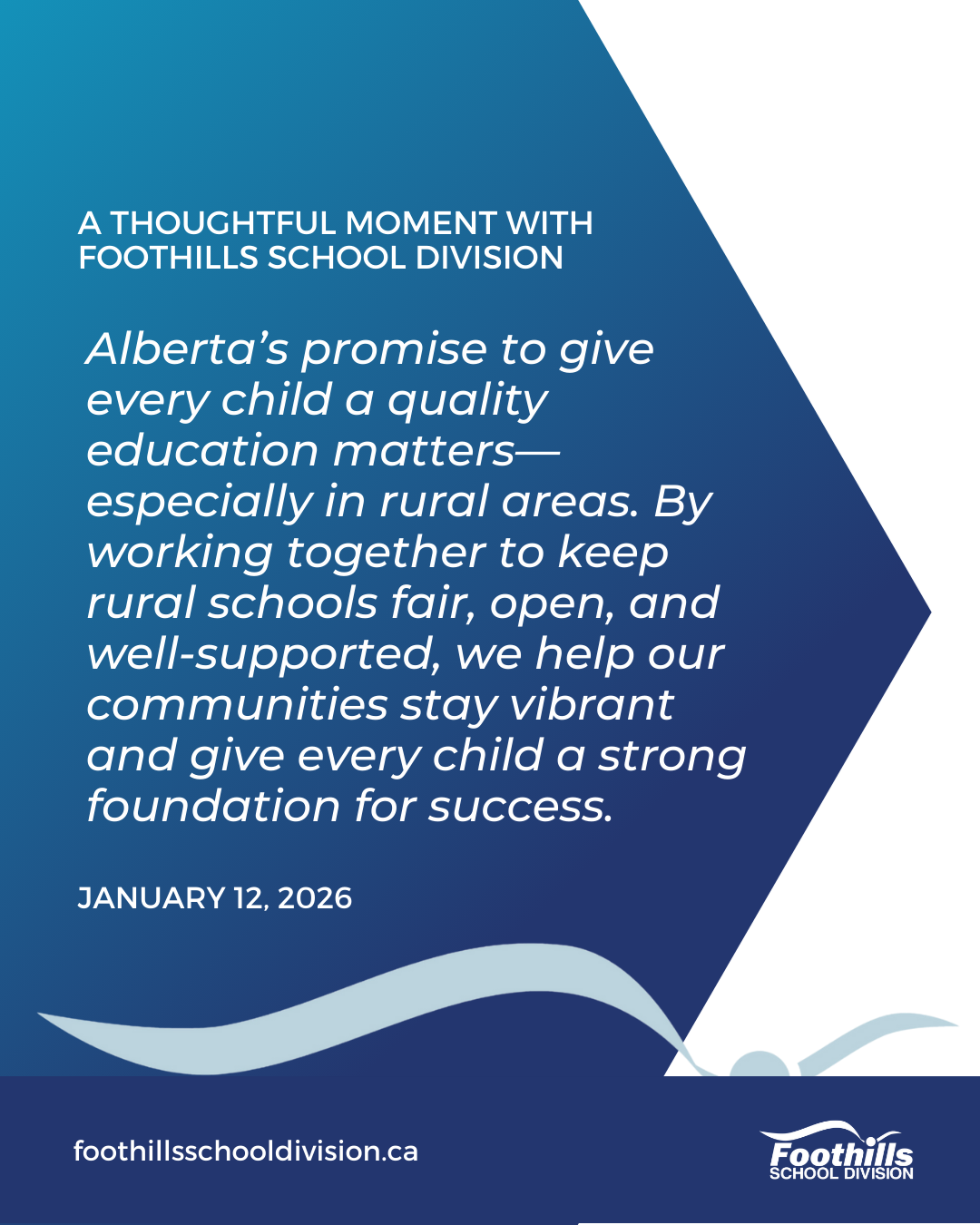
Alberta’s promise to give every child a quality education matters—especially in rural areas. By working together to keep rural schools fair, open, and well-supported, we help our communities stay vibrant and give every child a strong foundation for success. Celebrating and safeguarding rural schools is about more than education; it’s about building a bright future for all families and communities across the Alberta.
Yours in learning,
 Chris Fuzessy
Superintendent of Schools
